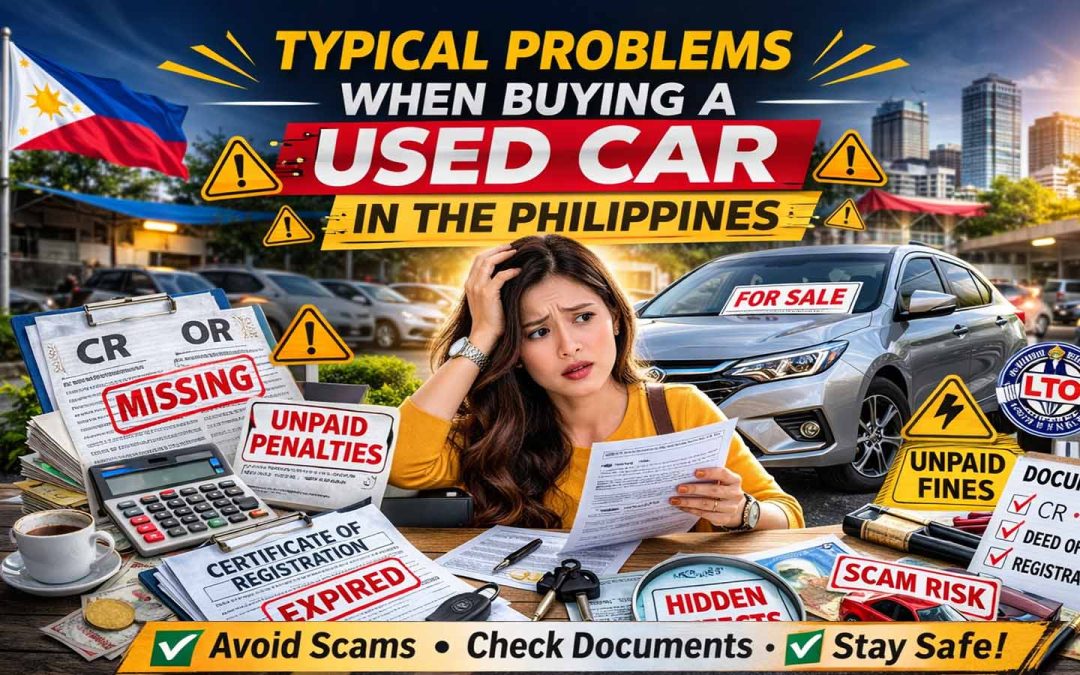
Typical Problems When Buying a Used Car in the Philippines
Buying a used car in the Philippines can be a great way to save money—but it also comes with risks. Many buyers encounter problems with documents, ownership, hidden defects, or LTO registration, which can lead to delays, extra costs, or even legal trouble.
If you’re planning to purchase a second-hand vehicle, it’s important to know the most common issues so you can avoid them.
1. Incomplete or Missing Documents
One of the most common problems when buying a used car in the Philippines is dealing with incomplete or missing documents. Many buyers only realize after the purchase that essential paperwork is unavailable, which can delay or even prevent ownership transfer. This can quickly turn a good deal into a stressful and costly situation.
Important documents include:
-
- Original Certificate of Registration (CR)
- Official Receipt (OR)
- Deed of Sale
- Valid IDs of the seller
⚠️ Risk: You may not be able to legally register the vehicle under your name.
Tip: Always verify that the OR and CR are original and match the vehicle details.
2. Open Deed of Sale Issues
An open deed of sale is very common in the Philippine used car market, but it can create serious complications for buyers. Because the buyer’s name is not filled in, ownership is unclear, which can lead to legal disputes or problems during LTO processing. Many buyers underestimate how risky this practice can be.
⚠️ Risks include:
-
- Ownership disputes
- Difficulty transferring the vehicle
- Legal complications if the previous owner cannot be contacted
Tip: Always complete the deed of sale properly and transfer ownership as soon as possible.
3. Problems with OR and CR
Issues related to the Official Receipt (OR) and Certificate of Registration (CR) are among the most frequent problems buyers face. These documents prove ownership and registration, so any inconsistency or missing information can create serious complications. Buyers often overlook small details that later cause delays or rejection at the LTO.
Typical problems:
- OR/CR not yet released
- Lost documents
- Mismatched vehicle information
⚠️ Risk: You cannot legally drive or register the vehicle.
Tip: Verify that the OR/CR:
-
- matches the engine and chassis number
- is registered under the seller’s name
4. Unpaid LTO Penalties or Violations
Some used vehicles come with unpaid penalties or violations that are not immediately disclosed by the seller. These can include late registration fees or traffic violations tied to the vehicle. Many buyers only discover these issues during registration, resulting in unexpected expenses that increase the overall cost of the purchase.
⚠️ Risk: You may be forced to pay these penalties after purchase.
Tip: Ask for proof of updated registration and check the vehicle’s status before buying.
5. Expired Vehicle Registration
Buying a car with expired registration is another common issue that many buyers overlook. While the vehicle may seem like a good deal, expired registration often means additional fees, penalties, and immediate processing requirements. This can quickly add unexpected costs and inconvenience right after the purchase.
⚠️ Risk:
-
- Additional penalties
- Immediate need for renewal
- Possible fines if driven
Tip: Check the registration validity date and calculate potential penalties before buying.
6. Hidden Mechanical Problems
Not all sellers are transparent about the condition of their vehicle. Some may hide mechanical problems to make the car more attractive to buyers. These hidden issues may not be noticeable during a quick inspection but can lead to expensive repairs shortly after purchase, making the car much more costly than expected.
Common hidden issues:
-
- engine problems
- transmission issues
- electrical faults
- accident damage
⚠️ Risk: Expensive repairs after purchase.
Tip:
-
- Bring a trusted mechanic
- Test drive the vehicle
- Check service history
7. Tampered Mileage (Odometer Fraud)
Odometer tampering is a deceptive practice where the vehicle’s mileage is reduced to make it appear less used. This can mislead buyers into thinking the car is in better condition than it actually is. As a result, buyers may overpay for a vehicle that has already experienced significant wear and tear.
⚠️ Risk: You may pay more for a vehicle that has actually been used heavily.
Tip:
- Compare mileage with wear and tear
- Check maintenance records
8. Carnapped or Stolen Vehicles
Although rare, buying a stolen or carnapped vehicle is one of the most serious risks in the used car market. These vehicles may appear legitimate, but purchasing one can lead to legal trouble and loss of the vehicle. Many buyers are unaware of this risk until it is too late.
⚠️ Risk:
- Vehicle may be confiscated
- Legal consequences
Tip:
- Verify records with LTO
- Avoid suspiciously low prices
9. Delays in Plate Number or OR/CR Release
Some vehicles, especially newer ones, may not yet have complete documentation such as plate numbers or finalized OR/CR. While this may seem like a minor issue, it can cause inconvenience when driving or passing checkpoints. Delays in documentation can also affect registration and ownership processes.
⚠️ Risk:
-
- Limited use of the vehicle
- complications during checkpoints
Tip: Ask for proof of processing and official receipts.
10. Problems with Transfer of Ownership
Failing to transfer ownership immediately after buying a used car can lead to long-term complications. Many buyers delay this process, thinking it is not urgent, but this can create issues with registration, legal responsibility, and future resale. Proper ownership transfer is essential for a smooth and secure transaction.
⚠️ Risks:
-
- legal responsibility remains with previous owner
- problems during registration renewal
- difficulty selling the car later
Tip: Process the transfer of ownership at LTO immediately after purchase.
Final Thoughts about buying a used car
Buying a used car in the Philippines can be a smart decision—but only if you do your due diligence.
Most problems come from:
- incomplete documents
- unpaid penalties
- hidden vehicle issues
By understanding these risks and checking everything carefully, you can confidently purchase a second-hand car without unexpected surprises.
FAQ – Buying a Used Car in the Philippines
Is it safe to buy a second-hand car in the Philippines?
Yes, as long as you verify documents, inspect the vehicle, and ensure proper ownership transfer.
What documents should I check before buying?
You should check the OR, CR, and deed of sale, and verify that all details match the vehicle.
Can I drive a car without transferring ownership?
Technically possible but not recommended. It can lead to legal and registration problems.
What is the biggest risk when buying a used car?
The biggest risks are fake or incomplete documents and hidden mechanical issues.