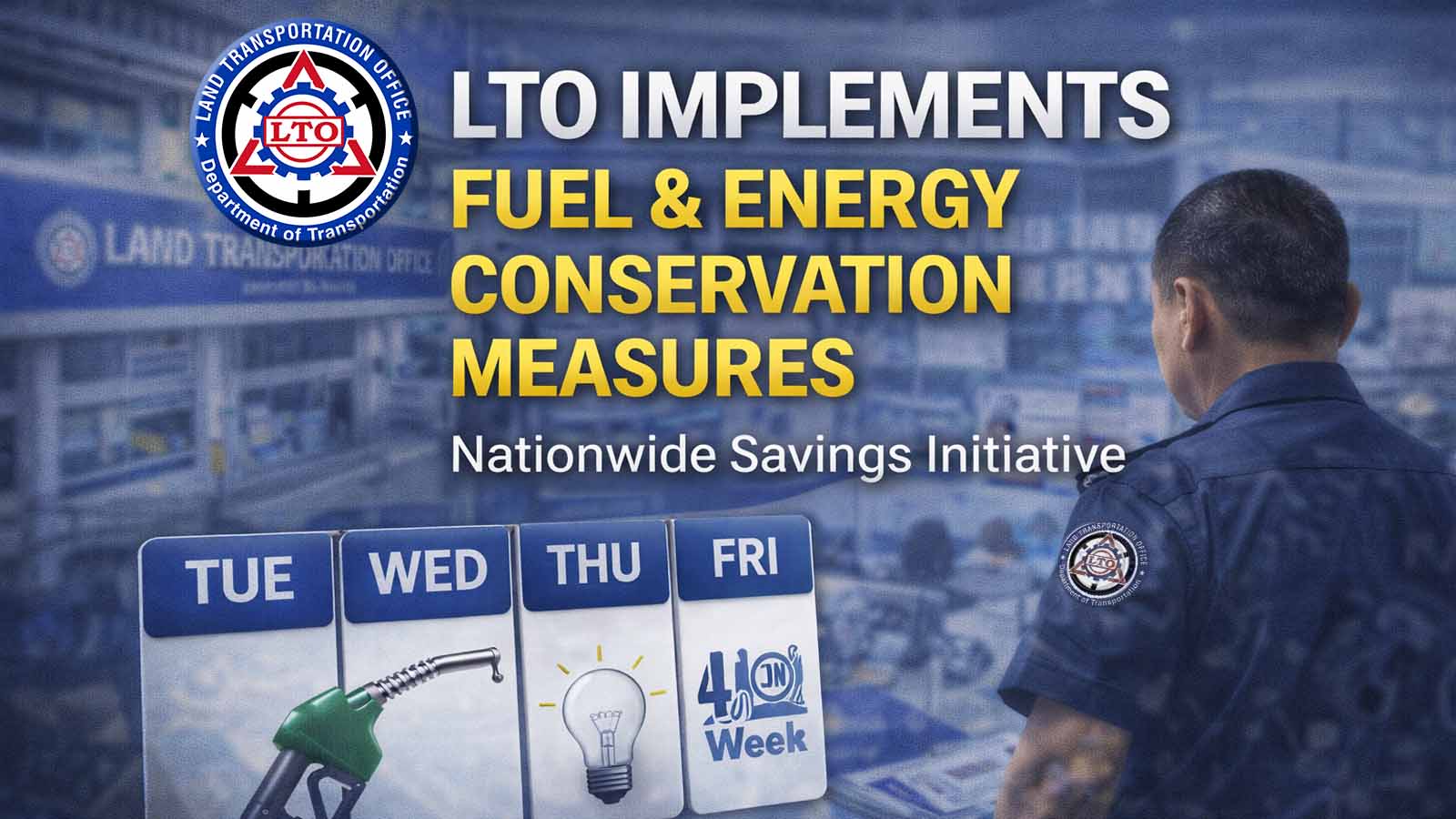
The Land Transportation Office (LTO) has begun implementing nationwide fuel and energy conservation measures in compliance with Memorandum Circular No. 114 issued by President Ferdinand Marcos Jr.
The initiative, carried out under the guidance of the Department of Transportation (DOTr), aims to reduce government energy consumption amid rising global oil prices linked to ongoing geopolitical tensions.
Despite these adjustments, the LTO assured the public that essential services will remain fully operational and unaffected.
Government Directive: Memorandum Circular No. 114
The rollout follows Memorandum Circular No. 114, s. 2026, which mandates all government agencies to adopt stricter energy-saving and fuel conservation measures.
Key Provisions of the Memorandum
-
- Implementation of energy conservation protocols across all agencies
- Adoption of a four-day onsite workweek starting March 9, 2026
- Use of flexible work arrangements, including work-from-home setups where applicable
- Continued full operations for essential frontline services
The directive is part of the government’s broader effort to manage the impact of rising fuel and electricity costs.
LTO’s Energy and Fuel-Saving Measures
In response, the LTO has introduced several internal measures to meet conservation targets while maintaining service efficiency.
Electricity Conservation Efforts
-
- Adjusted air conditioning settings
- Reduced use of non-essential lighting
- Optimized use of office equipment
Fuel Consumption Reduction
-
- Suspension of non-essential travel, including team-building activities and conferences
- Reduced operational movements where possible
Work Arrangement Adjustments
-
- Adoption of a four-day onsite workweek for non-frontline offices
- Continued full operations for frontline services such as licensing and registration
Target: 10–20% Reduction in Energy Use
The LTO aims to achieve:
-
- At least 10% reduction in fuel consumption
- Around 10% to 20% reduction in electricity usage
According to Assistant Secretary Markus V. Lacanilao, all personnel are expected to contribute to achieving these targets while ensuring that services remain uninterrupted.
“Every LTO member has a role in achieving savings, while ensuring that core services continue without disruption.”
Frontline Services Remain Fully Operational
The LTO emphasized that services directly affecting the public—such as:
- Driver’s license applications and renewals
- Vehicle registration
- Other frontline transactions
will continue on all regular working days despite the new work arrangements.
This ensures that motorists will not experience delays or reduced access to essential LTO services.
Part of Broader Government Efficiency Efforts
The implementation of energy-saving measures reflects the government’s push for efficiency, sustainability, and cost reduction across all agencies.
By reducing fuel and electricity consumption, the initiative aims to:
-
- Lower operational costs
- Promote responsible energy use
- Maintain uninterrupted public service delivery
The LTO’s implementation of these measures reflects a broader commitment to responsible governance and efficient public service. While adjustments such as reduced energy use and modified work arrangements are now in place, the agency assures motorists that service quality and accessibility will remain unchanged.
As global fuel and energy challenges continue to impact operations, the LTO aims to strike a balance between sustainability and reliability, ensuring that essential services remain accessible while contributing to nationwide conservation efforts.
LTO Files Charges vs Central Office Employee
The LTO files charges and suspends a Central Office emp…

Digital Driver’s License Now valid via eGovPH App
The LTO confirms that digital driver’s licenses can n…

LTO Appoints New Region 7 Director
The LTO appoints a new Regional Director and replaces e…