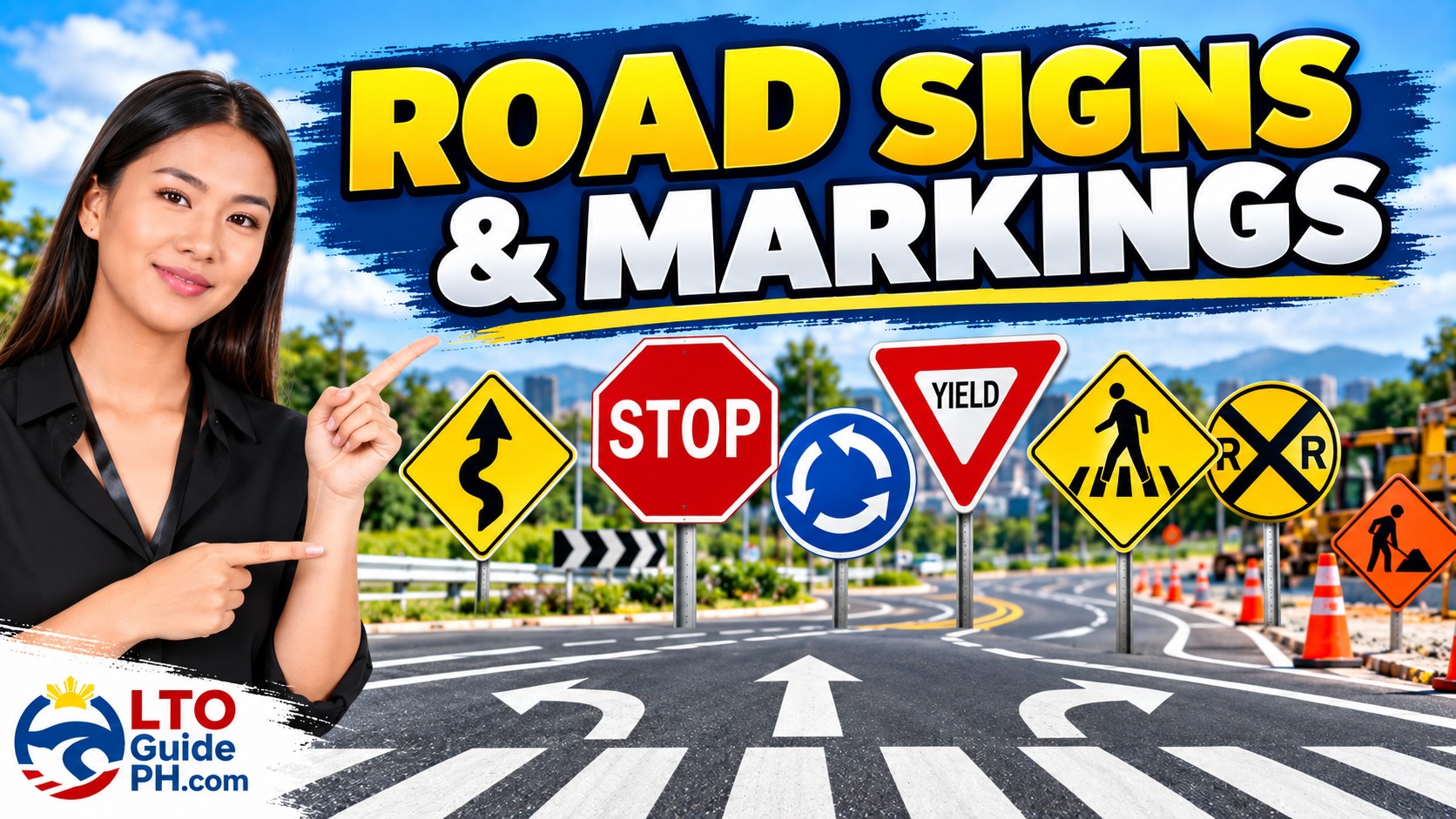
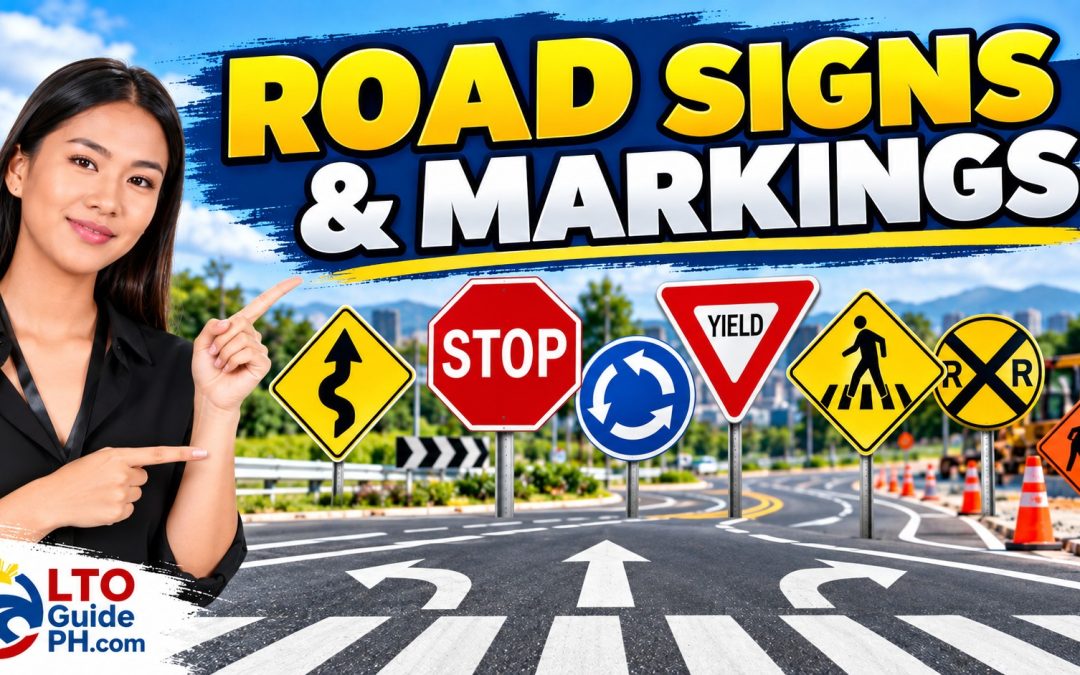
Road signs and markings are an essential part of the road system. They communicate warnings, restrictions, directions, and information to drivers, cyclists, and pedestrians without the need for lengthy instructions.
Whether you are a new driver, preparing for a driving test, or simply want to refresh your knowledge, understanding common traffic signs can help you recognize potential hazards and make safer decisions on the road.
In this guide, we explain common road signs and road markings, including Stop signs, Yield signs, pedestrian crossings, roundabouts, railroad crossings, lane changes, warning signs, road work signs, and more.
Watch our Road Signs and Markings video:
We have also prepared a video guide that shows and explains many of the signs covered in this article. It can be useful for visually learning the signs and remembering what they mean.
What Are Road Signs and Markings?
Road signs are visual instructions placed along or above roads to communicate important information to road users. They can warn drivers about hazards, regulate traffic, provide directions, or indicate special road conditions.
Road markings are painted or otherwise applied directly to the road surface. These include center lines, lane lines, stop lines, pedestrian crossings, arrows, and other markings that help organize traffic.
Together, signs and markings help drivers understand:
When they must stop or yield
Where they can or cannot turn
Which lane they should use
Where pedestrians may cross
When road conditions require extra caution
Where hazards or changes in the road are approaching
How traffic should move through intersections and other areas
The exact appearance and legal meaning of signs can vary between countries and jurisdictions. Drivers should therefore always follow the traffic regulations and official road signs applicable in the area where they are driving.
Important Road Signs Every Driver Should Know
1. Stop Sign
A Stop sign tells drivers to come to a complete stop.
Drivers should stop at the designated stop line or, where applicable, before entering the intersection or crossing area. After stopping, check for pedestrians, cyclists, and other vehicles before proceeding when it is safe.
A Stop sign does not mean simply slowing down. The vehicle must come to a complete stop.
2. Yield Sign
A Yield sign tells drivers to slow down and give priority to other road users where required.
Approaching a Yield sign, check for vehicles, pedestrians, and cyclists. Be prepared to stop if necessary and proceed only when the way is clear.
Yield signs are particularly important at intersections, merging areas, roundabouts, and other locations where traffic streams meet.
3. Pedestrian Crossing
A Pedestrian Crossing sign warns drivers that pedestrians may be crossing the road.
Reduce your speed and watch carefully for people entering or already using the crossing. Be prepared to stop and give pedestrians the priority required by local traffic rules.
Extra caution is particularly important near schools, residential areas, shopping districts, and busy intersections.
4. School Zone and School Crossing
School Zone signs indicate that you are approaching an area where children may be present.
A School Crossing sign specifically warns drivers about children crossing the road.
Slow down, remain alert, and be prepared to stop. Children may not always behave predictably around traffic, so drivers should avoid distractions and be ready for someone to enter the roadway.
5. Roundabout Ahead
A Roundabout Ahead sign warns that a circular intersection is approaching.
Drivers should reduce speed and prepare to yield according to the traffic rules governing the roundabout.
Pay attention to vehicles already circulating, pedestrians at crossings, lane markings, and directional signs.
Do not enter a roundabout at excessive speed. Enter only when there is a safe gap and follow the correct lane and exit.
6. Railroad Crossing Ahead
A Railroad Crossing Ahead warning sign indicates that railway tracks are approaching.
Slow down and look and listen for trains. Follow any additional signals, barriers, lights, or road markings at the crossing.
Never attempt to cross if warning lights are active, barriers are down, or a train is approaching.
Railroad crossings require particular attention because trains cannot stop quickly enough to avoid a vehicle that enters their path.
7. Merging Road
A Merging Road sign warns that another stream of traffic may join the roadway.
Remain aware of vehicles approaching from the merging side and maintain an appropriate speed and following distance.
The precise priority rules for merging traffic vary by jurisdiction, so drivers should follow local regulations rather than assuming that one vehicle always has priority.
8. Lane Narrowing or Ending Lane
A Lane Ending or Lane Narrowing sign warns that a lane will end or that the available road width will decrease.
If you are traveling in the ending lane, prepare to move safely into another lane.
Check mirrors and blind spots, signal where required, and avoid making a sudden lane change.
9. Added Lane
An Added Lane sign indicates that an additional lane is being introduced.
Unlike an ending lane, traffic does not necessarily have to merge because of the added lane.
Drivers should follow the lane markings and directional signs and maintain a safe speed while adjusting to the additional lane.
10. Side Road
A Side Road sign warns that another road intersects the main road from the side.
Slow down and remain alert for vehicles entering or crossing your path.
A side-road warning can be especially important where visibility is limited or where vehicles may enter the main road unexpectedly.
11. T-Intersection Ahead
A T-Intersection Ahead sign warns that the road you are traveling on will end at another road.
Prepare to turn left or right and watch for other traffic.
Do not assume that the traffic on the continuing road will stop for you. Follow the applicable right-of-way rules and any Stop or Yield controls at the intersection.
12. Crossroads
A Crossroads warning sign indicates that an intersection is ahead.
Traffic may approach from both sides or from the opposite direction, depending on the road layout.
Reduce speed and watch carefully for vehicles, pedestrians, bicycles, and other road users entering the intersection.
13. Traffic Signals Ahead
A Traffic Signals Ahead warning sign tells drivers that a signalized intersection or traffic light is approaching.
Slow down and be prepared to stop.
Do not accelerate simply because the traffic signal is not yet visible. Traffic lights can change quickly, and stopping safely requires enough distance.
Warning Signs for Road Conditions
Many road signs do not regulate traffic directly. Instead, they warn drivers about conditions that require extra attention.
14. Slippery When Wet
A Slippery When Wet sign warns that the road may become slippery during rain or when the surface is wet.
Reduce speed and avoid sudden braking, steering, or acceleration.
Allow additional following distance because wet roads can increase stopping distances and reduce tire grip.
15. Narrow Bridge or Road
A Narrow Bridge or Narrow Road warning sign indicates that the available road width is reduced ahead.
Slow down and watch for approaching traffic.
On a particularly narrow section, drivers may need to follow additional signs or give way according to local traffic rules.
16. Winding Road
A Winding Road sign warns of several curves ahead.
Reduce your speed before entering the series of curves rather than waiting until you are already negotiating them.
Stay within your lane and avoid overtaking where visibility is insufficient.
17. Sharp Right Turn
A Sharp Right Turn sign warns that the road turns sharply to the right.
Reduce speed before the turn and maintain control of the vehicle throughout the curve.
Follow any advisory speed displayed with the warning sign.
18. Sharp Right and Left Turns
A sign showing sharp turns in both directions warns that multiple curves are approaching.
The road may first turn sharply in one direction and then quickly change direction.
Slow down and remain prepared for the next curve rather than accelerating immediately after completing the first one.
19. Road Curves Right
A Road Curves Right warning sign indicates that the road bends to the right ahead.
Reduce speed as appropriate for the road conditions and any posted advisory speed.
Be especially careful if the curve has limited visibility, a steep slope, wet pavement, or other hazards.
20. Curve With Side Road
A warning sign showing a curve with a side road indicates that the main road curves while another road joins from the side.
Slow down and remain alert for vehicles entering the road.
The combination of a curve and an intersecting road can reduce visibility, making careful observation especially important.
Signs Showing Changes to the Road
21. Divided Road
A Divided Road sign indicates that the roadway ahead is separated by a median, barrier, or other divider.
Drivers should follow the correct side of the divided roadway and pay attention to lane markings and directional signs.
22. Divided Road Ends
A Divided Road Ends sign warns that the physical separation between opposing traffic will end.
Drivers should prepare for a change in the road layout and remain alert for traffic traveling in the opposite direction.
23. Limited Height
A Limited Height sign warns of restricted overhead clearance.
This is particularly important for trucks, buses, vans, recreational vehicles, and other tall vehicles.
Drivers should check the height of their vehicle before entering an area with limited clearance. Never assume that a vehicle will fit under a structure.
24. Speed Bumps Ahead
A Speed Bumps Ahead sign warns that raised sections of the roadway are approaching.
Reduce speed before reaching the bump and maintain control of the vehicle.
Speed bumps are generally installed to encourage slower traffic in areas where excessive speed could create a safety risk.
25. Steep Uphill Road
A Steep Uphill Road warning sign indicates a significant uphill gradient ahead.
Drivers may need to adjust speed and, depending on the vehicle and road conditions, use an appropriate lower gear.
Heavy vehicles should take particular care when approaching steep climbs.
26. Steep Downhill Road
A Steep Downhill Road sign warns of a significant descent.
Control your speed before going downhill. On vehicles equipped with manual transmissions, selecting an appropriate lower gear can help with engine braking.
Avoid relying entirely on continuous braking, particularly on long or steep descents.
Regulatory and Prohibitory Signs
Some signs tell drivers that a particular action is prohibited.
27. Do Not Enter
A Do Not Enter sign tells drivers not to enter the road, lane, or area facing the sign.
Never enter simply because the road appears empty.
Such signs are commonly used to prevent vehicles from entering areas where traffic is traveling in the opposite direction or where entry is otherwise prohibited.
28. No U-Turn
A No U-Turn sign prohibits making a U-turn at the location covered by the sign.
Drivers must continue in the permitted direction and find an appropriate location where turning around is legal and safe.
29. Right Turn Prohibited
A Right Turn Prohibited sign tells drivers that they must not turn right at the indicated location.
Follow the permitted directions and look for alternative routes if you need to reach a destination requiring a right turn.
Road Work and Temporary Hazards
30. Road Work Ahead
A Road Work Ahead sign warns drivers that construction, maintenance, or other work is taking place on or near the roadway.
Reduce speed and pay attention to temporary signs, cones, barriers, workers, and changes in lane position.
If workers are operating close to traffic, give them as much space as safely possible and follow any temporary traffic controls.
Why Road Markings Matter
Road signs are only one part of the traffic-control system. Road markings also provide important information to drivers.
Common road markings include:
- Center lines
- Lane divider lines
- Edge lines
- Stop lines
- Pedestrian crossings
- Directional arrows
- Turn arrows
- Hatched or painted areas
- Parking restrictions
- Bicycle lane markings
- Lines separating opposing traffic
A driver should not focus only on roadside signs. The markings on the road can tell you which lane to use, where to stop, whether you can cross into another lane, and which direction traffic is supposed to travel.
Stop Lines
A stop line indicates where a vehicle should stop when required by a Stop sign, traffic signal, or other traffic control.
Stopping beyond the line can potentially place the vehicle into a pedestrian crossing or intersection area.
Lane Lines
Lane markings separate lanes traveling in the same or different directions.
Drivers should stay within their designated lane and cross lane markings only when permitted and safe.
Pedestrian Crossings
Zebra crossings and other pedestrian crossing markings identify areas where pedestrians may cross the road.
Drivers should approach crossings at a safe speed and be prepared to stop for pedestrians according to local traffic laws.
Directional Arrows
Arrows painted on the road can indicate permitted or required directions for a particular lane.
For example, a lane may be designated for vehicles turning left, traveling straight, or turning right.
Always follow the combination of road markings and signs rather than relying on the arrow alone.
Why Learning Road Signs Is Important
Knowing the meaning of road signs is more than a matter of passing a driving test.
Signs help drivers anticipate what is coming next. A warning sign can give you time to slow down before reaching a dangerous curve. A pedestrian crossing sign can remind you to look for people near the roadway. A lane-ending sign can give you time to change lanes safely.
Good drivers do not simply react to what is directly in front of them. They read the road ahead and anticipate changes in traffic and road conditions.
Understanding signs and markings can therefore help with:
- Safer decision-making
- Better hazard awareness
- Correct lane positioning
- Appropriate speed selection
- Understanding intersections
- Protecting pedestrians and cyclists
- Responding correctly to temporary road conditions
Road Signs Can Differ Between Countries
One important point to remember is that road signs are not completely identical around the world.
Different countries and regions may use different colors, symbols, shapes, road markings, or wording. Even when two signs look similar, the precise legal requirements can differ.
For this reason, drivers should always learn the official traffic signs and regulations applicable to the country or jurisdiction where they drive.
The signs explained in this guide represent common road-sign concepts and are intended as a general educational resource.
Watch the Road Signs Exam Reviewer Video
Reading about traffic signs is useful, but seeing the signs and testing your knowledge can make them much easier to recognize and remember.
Our Road Signs Exam Reviewer video takes you through important road signs and gives you an opportunity to review their meanings before taking your driving or LTO exam.
If you are preparing for your LTO written exam, driver's license exam, or driving test, use this video as an additional reviewer. Try to identify each road sign before the answer is revealed and see how many you can recognize correctly.
Review the video as often as needed, especially for signs that you find difficult to remember.
Final Thoughts
Road signs and markings provide a common visual language for everyone using the road. They warn drivers about hazards, regulate traffic, provide information, and help organize vehicles and pedestrians.
The most important habit is not simply memorizing the appearance of a sign. Drivers should learn to recognize the sign, understand the situation it describes, and respond appropriately.
Always remain alert, obey the official traffic rules in your jurisdiction, and remember that road conditions can change even when no warning sign is present.
Safe driving starts with understanding the road ahead.