
Emission Testing & CTPL Insurance
Requirements, Costs, Renewal Rules & Compliance Rules
Emission Testing & CTPL Insurance for LTO Registration
Emission testing and CTPL insurance are mandatory requirements for vehicle registration and renewal in the Philippines. Before the Land Transportation Office (LTO) processes a registration transaction, vehicle owners must secure a valid emission test certificate and active Compulsory Third-Party Liability (CTPL) insurance coverage. These compliance requirements apply to both private and commercial vehicles. Understanding how they work helps prevent delays, failed renewals, and unnecessary penalties during LTO transactions.
What Is LTO Emission Testing?
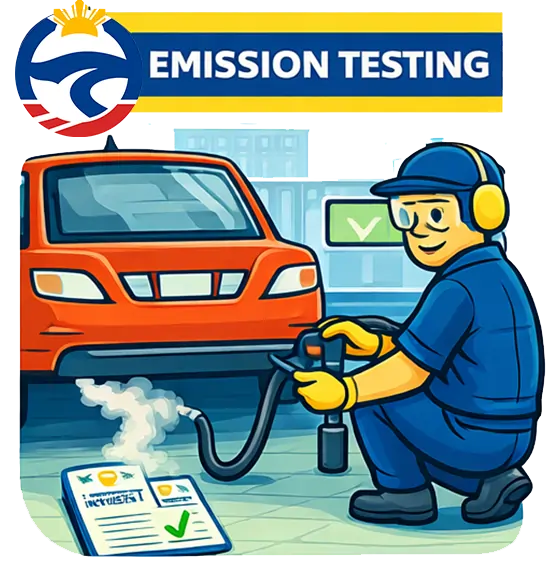 Emission testing verifies that a vehicle meets environmental standards set by regulatory authorities before registration approval.
The test measures exhaust emissions and ensures the vehicle does not exceed allowable pollution limits.
It is conducted at accredited Private Emission Testing Centers (PETCs) and is required before both annual renewal and certain ownership transfers. Without a valid emission certificate, the LTO will not process registration transactions.
Emission testing typically involves:
-
- Verification of engine and chassis numbers
- Exhaust gas analysis
- Visual vehicle inspection
- Computerized result recording
- Certificate issuance upon passing
Failed tests require vehicle repair and retesting. Securing emission clearance early prevents last-minute renewal delays and ensures your vehicle complies with environmental regulations before visiting the LTO branch.
🔍 People Also Ask
❓ Is emission testing required every year in the Philippines?
Yes. A valid emission test certificate is required before annual registration renewal.
👉 Learn more: Registration Renewal Guide
❓ Can I renew registration without CTPL insurance?
No. Valid CTPL insurance is mandatory for LTO registration processing.
👉 Read more: Registration Requirements
❓ What happens if I fail emission testing?
You must repair the vehicle and undergo retesting before approval. If you are late, you might face penalties
👉 More Info: Late Registration Penalties
❓ Is CTPL the same as comprehensive insurance?
No, it is something different. CTPL covers third-party liability only, not vehicle damage.
👉 Learn more: LTO Vehicle Registration Guide
What Is CTPL Insurance?
Compulsory Third-Party Liability (CTPL) insurance is a mandatory coverage required before LTO registration approval. It protects third parties in case of injury or death resulting from vehicle-related accidents. CTPL does not cover vehicle damage; it strictly covers third-party liability as required by law. Without valid CTPL insurance, the LTO will not process vehicle registration or renewal.
CTPL insurance typically includes:
- Coverage for third-party bodily injury
- Mandatory government-regulated limits
- Policy documentation linked to plate number
- One-year validity period
- Insurer accreditation verification
Policy details must match vehicle records. Securing CTPL insurance from an accredited provider ensures smooth registration processing and compliance with national insurance requirements.
How to Secure Emission Testing and CTPL Properly
Proper sequencing helps prevent delays during LTO visits. Vehicle owners should first complete emission testing, then secure CTPL insurance, and finally proceed to the LTO branch. Ensuring that all documentation reflects accurate vehicle details is essential for approval. Errors in plate number or chassis number may cause rejection.
Recommended sequence includes:
- Visit accredited emission testing center
- Secure passing certificate
- Purchase CTPL from accredited insurer
- Verify all vehicle details
- Prepare OR and CR for submission
Keep original documents for presentation. Following this order reduces administrative issues and ensures both requirements are ready before LTO processing begins.
Common Issues With Emission Testing
Several problems may arise during emission testing, especially if vehicles are poorly maintained. High emission levels, engine defects, or identification mismatches can cause test failure. Owners should ensure vehicles are mechanically sound before testing to avoid retesting fees and delays.
Common emission testing issues include:
- Failed exhaust readings
- Engine misfire or malfunction
- Incorrect engine or chassis numbers
- Expired previous certificate
- System recording errors
Retesting requires additional payment in most cases. Routine vehicle maintenance prior to emission testing significantly improves the likelihood of passing on the first attempt.
Common Issues With CTPL Insurance
CTPL-related delays usually stem from incorrect policy information or purchasing from non-accredited providers. If the insurer is not properly recognized or if vehicle details do not match LTO records, processing may be rejected. Careful verification prevents administrative complications.
Common CTPL issues include:
- Incorrect plate number entry
- Mismatched engine details
- Expired insurance policy
- Non-accredited insurance provider
- Missing official policy documentation
Errors may require policy correction before approval. Verifying CTPL accuracy before visiting the LTO helps prevent processing delays and unnecessary return visits.
How Emission and CTPL Affect Renewal Costs
Emission testing and CTPL insurance are separate from LTO administrative fees but directly affect total renewal expenses. Vehicle owners should budget for these costs in addition to MVUC and registration charges. Failing to account for them may delay renewal processing.
Renewal cost components include:
-
- Emission testing fee
- CTPL insurance premium
- MVUC payment
- Registration fee
- Computer and sticker fees
Costs vary depending on vehicle classification.
For full fee breakdown, see:
👉 LTO Vehicle Registration Fees
Understanding total renewal cost components helps vehicle owners prepare financially and avoid incomplete payment issues.
FAQs about OR and CR
How long is an emission certificate valid?
Validity typically aligns with the renewal transaction and must be active at time of LTO processing.
Can I choose any insurance provider for CTPL?
Only LTO-accredited insurance providers are accepted..
Is emission testing required for motorcycles?
Yes. Motorcycles must undergo emission testing before renewal.
Do emission and CTPL apply to new vehicles immediately?
Emission testing applies at first renewal; CTPL is required upon registration
Final Thought
Emission testing and CTPL insurance are embedded requirements within the vehicle registration framework. Securing both before LTO processing reduces transaction delays and avoids repeat visits. Proactive compliance ensures smoother renewal cycles and minimizes enforcement risk.