
LTO Car Registration Requirements
Documents for renewal, transfer of ownership, new registration, emission testing, and CTPL
LTO Car Registration Requirements (Complete Checklist)
Understanding LTO car registration requirements in the Philippines is essential before visiting any Land Transportation Office branch. Incomplete documentation is the most common reason for delays, repeat visits, and additional emission testing expenses.
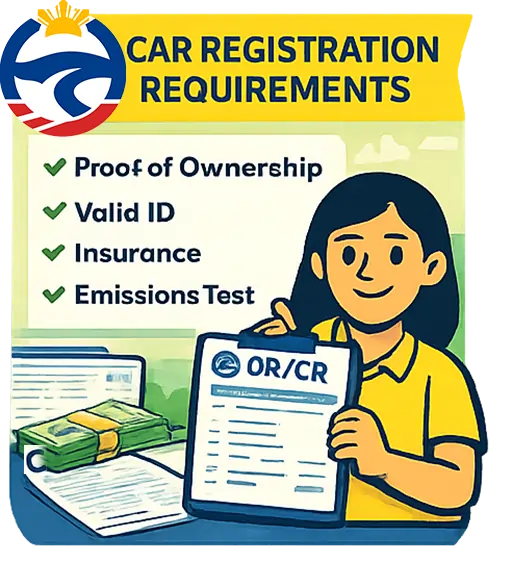
Whether you are renewing your registration, transferring ownership, registering a brand-new car, or settling late registration, this guide provides a complete and structured checklist. If you need a broader overview of the entire registration system, refer to the main
👉 LTO Car Registration Guide
General Requirements for Car Registration
Most LTO car registration transactions share a core set of required documents. Preparing these in advance significantly reduces processing time and prevents unnecessary penalties.
The standard documents include:
- Original Official Receipt (OR)
- Original Certificate of Registration (CR)
- Valid Compulsory Third-Party Liability (CTPL) insurance
- Emission test certificate from accredited center
- Valid government-issued ID
- Payment of applicable registration fees and MVUC
For commercial cars, additional permits or franchise documents may be required.
Even if your case seems straightforward, verifying document completeness before visiting LTO ensures faster approval and avoids repeat testing fees.
🔍 People Also Ask
❓ Do I need the original OR and CR for renewal?
Yes. Original OR and CR documents are required for most registration transactions, including renewal and ownership transfer.
👉 Learn more: OR and CR Guide
❓ Can I renew registration without emission testing?
No. A valid emission test certificate from an accredited center is required before renewal processing.
👉 Full Guide: Emission Testing Guide
❓ Is notarized Deed of Sale required for ownership transfer?
Yes. A notarized Deed of Sale is mandatory for legal transfer of car ownership at LTO.
👉 All Info: Transfer of Ownership
❓ What documents are required for late registration?
Original OR/CR, updated emission certificate, valid CTPL insurance, and payment of penalties are required.
👉 Read more: Late Registration Penalties
Requirements for Annual Registration Renewal
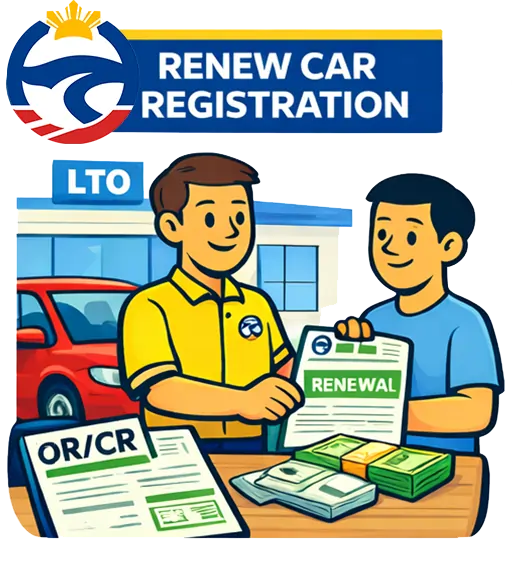 Annual renewal is the most common LTO transaction. It must be completed according to the assigned plate number schedule to avoid penalties.
To renew your car registration, prepare:
-
- Original OR and CR
- Valid CTPL insurance (current year)
- Valid emission test certificate
- Payment for MVUC and renewal fees
- Authorization letter (if processed by representative)
Emission testing must be completed prior to visiting the LTO branch. Insurance must also be valid before processing.
For a full step-by-step renewal process and penalty explanation, see:
👉 How to Renew LTO Car Registration
Completing renewal within your assigned month prevents late fees and possible apprehension during traffic checks.
Requirements for Transfer of Ownership
When buying or selling a second-hand car, ownership must be legally transferred at the LTO. Failure to transfer ownership may leave the previous owner liable for violations committed by the new driver.
Required documents include:
-
- Notarized Deed of Sale
- Original OR and CR
- Valid IDs of buyer and seller
- Emission test under new owner’s name
- Valid CTPL insurance
- Payment of transfer and registration fees
- Clearance if car is mortgaged
All documents must be accurate and consistent. Errors in name spelling or car details may cause rejection.
For full legal compliance and common mistakes to avoid, see:
👉 LTO Transfer of Ownership Guide
Processing transfer immediately after purchase protects both parties legally.
Requirements for Brand-New Car Registration
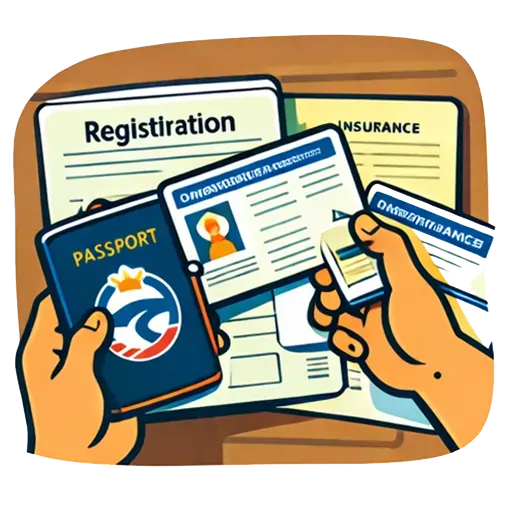 Brand-new cars purchased from dealerships (casa) are typically registered by the dealer. However, buyers should understand what documentation is involved and what to verify before driving the car.
Registration usually includes:
-
- Sales invoice
- Dealer’s endorsement documents
- Insurance documentation
- Payment of registration and MVUC
- Issuance of temporary plate (if applicable)
Buyers should confirm receipt of OR and CR once registration is completed.
For complete dealer vs LTO processing details, see:
👉 New Car Registration Guide
Verifying registration status before using the car ensures compliance and prevents checkpoint complications.
Requirements for Late or Backlog Registration
If your car registration has expired, additional requirements and penalties apply. The longer the delay, the higher the accumulated surcharge.
Documents typically required include:
-
- Original OR and CR
- Updated emission test certificate
- Valid CTPL insurance
- Payment of overdue MVUC
- Accumulated penalty payment
Penalty computation depends on car type and length of expiration.Addressing expired registration promptly reduces financial burden and prevents impoundment risk.
Emission Testing Requirements
Emission testing is mandatory for most renewal and transfer transactions. The test must be conducted at an accredited Private Emission Testing Center (PETC).
Requirements for emission testing:
-
- Car must be physically present
- Engine and chassis numbers must match CR
- Valid OR and CR
- Payment of emission testing fee
Failed emission tests must be corrected before renewal can proceed.
For a complete compliance guide including validity rules, see:
👉 Emission Testing & CTPL Insurance Guide
Ensuring your car passes emission standards avoids repeat testing fees and renewal delays.
Common Mistakes That Delay Registration
Many car owners experience delays due to preventable errors. Understanding these common issues can help you avoid repeat visits.
Frequent mistakes include:
- Expired CTPL insurance
- Emission test completed too early
- Incorrect Deed of Sale information
- Missing original OR or CR
- Late renewal beyond assigned month
Being proactive with document preparation significantly improves processing time.
For a complete overview of the entire registration system, visit the main pillar:
👉 LTO Car Registration Guide
Avoiding these common mistakes saves time, money, and unnecessary frustration.
FAQs about the Registration Requirements
Can I submit photocopies instead of originals?
No. Original OR and CR documents are required for most LTO registration transactions.
Is authorization allowed for representatives?
Yes. An authorization letter and valid IDs are required.
Is CTPL required for motorcycles?
Yes. CTPL insurance is mandatory for motorcycles and all motor cars.
How long is emission testing valid?
Emission certificates are typically valid only for a limited period before renewal.
Can I register at any LTO branch?
Generally yes, but some cases may require processing at specific offices.
Final Thought
Understanding vehicle registration requirements before visiting an LTO branch significantly reduces processing delays and administrative corrections. Proper documentation, valid insurance, emission compliance, and accurate vehicle records form the foundation of successful registration approval.
Preparing all requirements in advance not only speeds up transactions but also prevents repeat visits and potential enforcement exposure. Compliance begins with documentation accuracy.