
Philippine Driving Laws
For Foreigners
Traffic Rules - Fines - Enforcement
Driving in the Philippines as a foreigner involves more than just holding a valid license. Traffic laws, enforcement practices, and penalties differ from many Western countries, and misunderstandings can quickly lead to fines or legal trouble.
This guide explains the most important Philippine driving laws for foreigners, including traffic rules, common violations, fines, police checkpoints, and what to expect during enforcement. It is written for tourists, expats, and long-term residents who want to drive legally and responsibly.
Are Philippine Driving Laws Different for Foreigners?
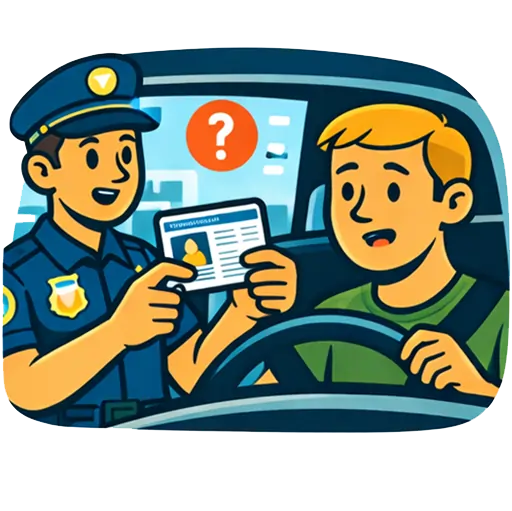 Foreigners are generally subject to the same traffic laws as Filipino drivers, but enforcement can feel stricter due to documentation checks.
Authorities often focus on:
-
- License validity
- Length of stay (90-day rule)
- Passport and entry date
- Vehicle registration and insurance
Failing to meet documentation requirements is one of the most common reasons foreigners are stopped.
👉 For license validity rules, see:
Can Foreigners Drive in the Philippines? Rules for Tourists and Expats
Basic Traffic Rules Foreign Drivers Must Know
Understanding core traffic rules helps prevent unnecessary violations.
Key Rules in the Philippines
-
- Driving is on the right-hand side
- Seat belts are mandatory for drivers and front passengers
- Helmets are mandatory for motorcycle riders
- Speed limits vary and may not always be clearly posted
- Mobile phone use while driving is prohibited without hands-free devices
Traffic behavior may appear informal in practice, but laws are enforceable, especially during checkpoints.
🔍 People Also Ask
❓ Can foreigners drive in the Philippines after 90 days?
Only if they convert their foreign driver’s license to a Philippine license through the Land Transportation Office (LTO).
👉 Full guide: Convert Foreign Driver’s License Philippines
❓ Does an International Driving Permit extend the 90-day rule?
No. An IDP does not extend the legal driving period beyond 90 days and cannot replace license conversion. Su be aware!
👉 Details: International Driving Permit Philippines
❓ What happens if a foreigner drives illegally after 90 days?
Driving without a valid Philippine license may result in fines, vehicle impoundment, and insurance issues, especially after accidents.
👉 Legal overview: Philippine Driving Laws for Foreigners
❓ What documents must foreigners carry while driving?
Foreign drivers should carry a valid driver’s license, passport, vehicle registration, and proof of insurance at all times.
👉 Legal checklist: Driving in the Philippines as a Foreigner
Speed Limits in the Philippines
Speed limits depend on road type and location:
- Urban roads: typically lower limits (30 Km/h)
- Provincial roads: moderate limits (70 Km/h
- Expressways: higher limits with toll requirements
Foreigners should be cautious, as speed limit signage is not always consistent, and enforcement may rely on officer discretion.
Common Traffic Violations Affecting Foreigners
Certain violations frequently involve foreign drivers due to unfamiliarity with local rules. Common offenses include:
-
- Driving with an invalid or expired license
- Driving beyond the 90-day limit without conversion
- Failure to carry a passport
- Illegal parking
- Reckless or aggressive driving
Penalties vary depending on the violation and location.
Fines and Penalties in the Philippines
Traffic violations may result in:
- On-the-spot fines
- Issuance of a violation ticket
- Temporary confiscation of a license
- Vehicle impoundment in serious cases
Foreigners should never attempt to negotiate informally. Always follow official procedures and request a ticket if cited.
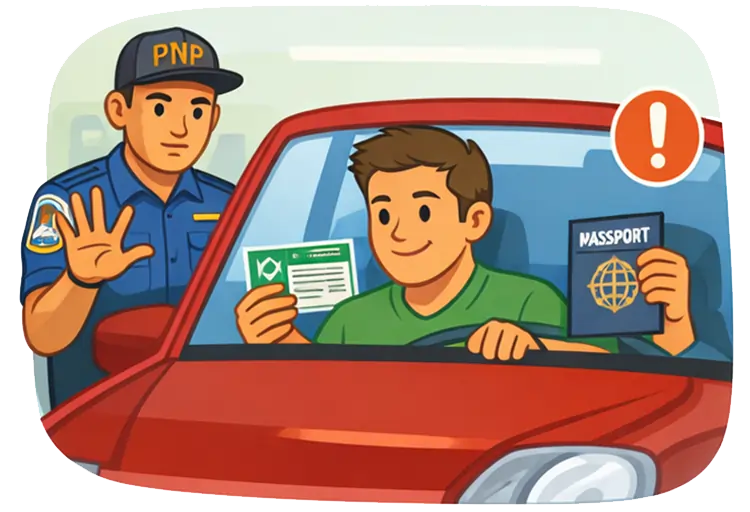 Police Checkpoints: What to Expect as a Foreigner
Police checkpoints are common, especially:
- At night
- During holidays
- In major cities
At checkpoints, foreigners are typically asked for:
- Driver’s license
- Passport
- Vehicle registration
- Proof of insurance
Having documents readily available usually results in a quick and smooth interaction.
Driving Without a Valid License: Legal Consequences
Driving without a valid license is considered a serious offense, particularly for foreigners. Consequences may include:
-
- Immediate fines
- Vehicle impoundment
- Denial of insurance claims after accidents
- Legal liability for damages
👉 For rules after the legal limit, see:
Driving in the Philippines After 90 Days
Traffic Accidents Involving Foreign Drivers
In case of an accident:
-
- Remain at the scene
- Contact local authorities
- Do not leave without clearance
- Document the incident
- Do not commit to any guilt.
Foreign drivers without valid licenses may face increased liability, even in minor accidents.
Insurance companies often check license validity before processing claims.
Are Traffic Laws Strictly Enforced Everywhere?
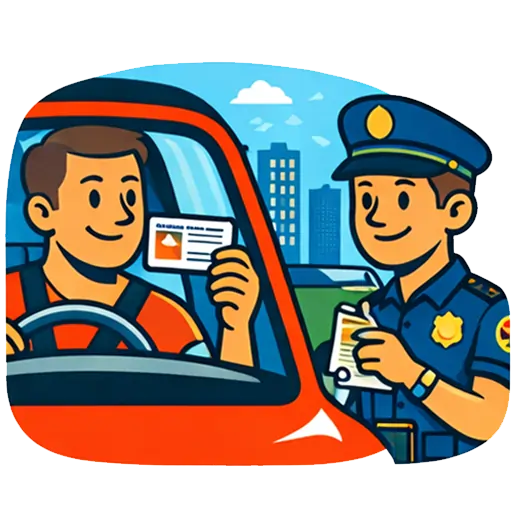 Enforcement consistency varies by region:
-
- Urban areas: stricter enforcement
- Tourist areas: frequent document checks
- Rural areas: fewer checkpoints but still enforceable
Foreigners should not rely on inconsistent enforcement, as penalties apply regardless of location.
Tips for Foreigners to Avoid Traffic Problems
To reduce risk:
-
- Always carry your license and passport
- Convert your license on time if staying long-term
- Avoid driving aggressively
- Follow posted signs carefully
- Ensure your vehicle documents are valid
Prepared drivers experience fewer issues.
Frequently Asked Questions
Are foreigners treated differently by traffic police?
Foreigners are subject to the same laws but may face stricter document checks.
Can police confiscate a foreign license?
In some cases, authorities may temporarily hold a license depending on the violation.
Is insurance valid without a Philippine license?
Insurance coverage may be denied if the driver was not legally authorized to drive.
Final Notes: Understanding Philippine Driving Laws as a Foreigner
Philippine driving laws apply equally to locals and foreigners, but documentation and legal compliance are especially important for foreign drivers. Knowing the rules, respecting enforcement procedures, and converting your license when required ensures safe and lawful driving.
Foreigners who stay informed and prepared avoid unnecessary fines, delays, and legal complications on Philippine roads.