
Driving in the Philippines After 90 Days
What Foreigners Need To Know
Foreigners are allowed to drive in the Philippines only for a limited time using a foreign driver’s license. Once this period ends, the legal requirements change significantly, and continuing to drive without compliance can lead to fines, penalties, or insurance problems.
This guide explains what happens after 90 days, who is affected, which documents are no longer valid, and how foreigners can continue driving legally. It is written for expats, long-term visitors, retirees, and foreign workers who want clarity and legal certainty.
What Is the 90-Day Driving Rule in the Philippines?
The 90-day rule allows foreigners to drive in the Philippines using a valid foreign driver’s license for up to 90 days from their date of arrival.
This rule applies regardless of:
-
- Nationality
- Visa type
- Whether you hold an International Driving Permit (IDP)
After 90 days, foreign driving privileges automatically expire and continued driving becomes illegal without license conversion.
👉 For the general framework, see:
Can Foreigners Drive in the Philippines? Rules for Tourists and Expats
Who Is Affected by the 90-Day Limit?
The 90-day driving limit applies to all foreign nationals, including:
-
- Expats and long-term residents
- Tourists with visa extensions
- Digital nomads
- Foreign employees and business travelers
- Retirees
Even if your visa is valid, your driving privilege is not automatically extended.
Does an International Driving Permit Extend the 90 Days?
No. An International Driving Permit does not extend the legal driving period.
The IDP only:
-
- Translates your foreign license
- Supports verification during checks
- Simplifies rentals and enforcement
It does not override Philippine law and becomes irrelevant after the 90-day period ends.
👉 See the detailed explanation:
International Driving Permit Philippines – Rules for Foreigners
What Happens If You Drive After 90 Days Without Conversion?
Driving after 90 days without converting your license is considered illegal driving under Philippine regulations.
Possible consequences include:
-
- Fines and penalties
- Vehicle impoundment
- Invalidation of insurance coverage
- Legal liability in case of an accident
Enforcement may vary, but risks increase significantly during:
-
- Accidents
- Police checkpoints
- Insurance claims
🔍 People Also Ask
❓ Can foreigners drive in the Philippines after 90 days?
Only if they convert their foreign driver’s license to a Philippine license through the Land Transportation Office (LTO).
👉 Full guide: Convert Foreign Driver’s License Philippines
❓ Does an International Driving Permit extend the 90-day rule?
No. An IDP does not extend the legal driving period beyond 90 days and cannot replace license conversion. Su be aware!
👉 Details: International Driving Permit Philippines
❓ What happens if a foreigner drives illegally after 90 days?
Driving without a valid Philippine license may result in fines, vehicle impoundment, and insurance issues, especially after accidents.
👉 Legal overview: Philippine Driving Laws for Foreigners
❓ What documents must foreigners carry while driving?
Foreign drivers should carry a valid driver’s license, passport, vehicle registration, and proof of insurance at all times.
👉 Legal checklist: Driving in the Philippines as a Foreigner
How Can Foreigners Drive Legally After 90 Days?
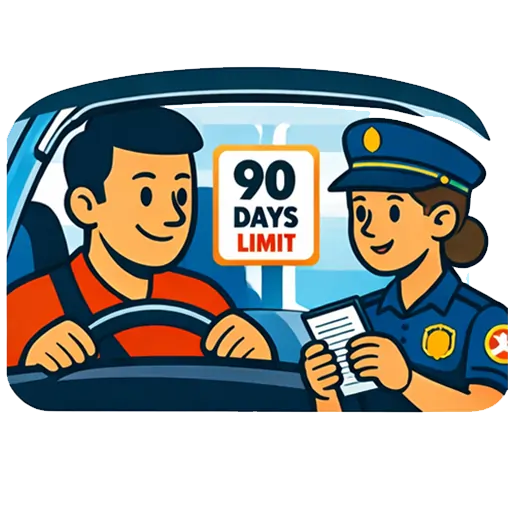 To continue driving legally, foreigners must:
➡️ Convert their foreign driver’s license into a Philippine driver’s license through the Land Transportation Office (LTO).
Once conversion is completed:
-
- There is no time limit on driving
- Police checks become straightforward
- Insurance coverage is clearer
👉 Step-by-step instructions are available here:
How to Convert a Foreign Driver’s License in the Philippines (LTO Guide)
Can You Drive While Waiting for License Conversion?
Foreigners may drive only if they are still within the 90-day window.
If the 90 days have already passed:
- Driving is not permitted
- There is no temporary permit for conversion waiting periods
- You must wait until the Philippine license is issued
Planning ahead is essential to avoid forced driving interruptions.
Does the 90-Day Rule Reset When You Leave the Country?
This is one of the most misunderstood aspects of Philippine driving law.
In practice:
-
- The 90-day period is based on your latest date of arrival
- Leaving and re-entering the country may reset the count
- However, enforcement interpretations can vary
For long-term residents, relying on resets is not recommended. Conversion remains the safest legal option.
Driving After 90 Days as an Expat or Resident
For expats, retirees, and foreign workers, license conversion is not optional.
Driving long-term without conversion may:
-
- Violate traffic regulations
- Create issues with employers or insurers
- Lead to repeated penalties
Holding a Philippine driver’s license provides full legal certainty and eliminates ambiguity.
Common Mistakes Foreigners Make After 90 Days
Avoid these frequent problems:
-
- Assuming an IDP extends legality
- Forgetting the arrival date reference
- Continuing to drive during conversion delays
- Relying on inconsistent enforcement
- Ignoring insurance implications
Understanding the rule early prevents costly mistakes.
Frequently Asked Questions
Can foreigners drive in the Philippines after 90 days?
Only if they convert their foreign driver’s license to a Philippine license.
Does a visa extension extend driving rights?
No. Immigration status does not affect driving privileges.
Is enforcement strict everywhere?
Enforcement varies, but penalties are serious when applied.
Final Notes: Driving in the Philippines After 90 Days
The 90-day driving rule is a clear legal cutoff for foreigners in the Philippines. While short-term visitors enjoy flexibility, long-term stays require compliance through license conversion.
Foreigners who convert their license on time avoid legal uncertainty and ensure uninterrupted, lawful driving in the Philippines.